Showing posts with label Trauma. Show all posts

Friday, March 3, 2023

Founders Day Message 2023

Founders Day Message 2023

Celebrations are an important event in that they offer mindful recognition for a meaningful event or an important mile stone. 

Founders Day is a day where I renew my commitment to serving you and to those suffering. It is also a time of mindful reflection on all of the good Blue Lotus Meditation and Mindfulness Center has provided individuals, our community, and the world. Although our practitioners come from all over the world, varying occupations and ages, they all experience suffering. Through Buddhas teachings, we have helped ease the suffering of people coping with addiction, trauma, homelessness, anxiety, stress, relationships, and PTSD to name only a few. 
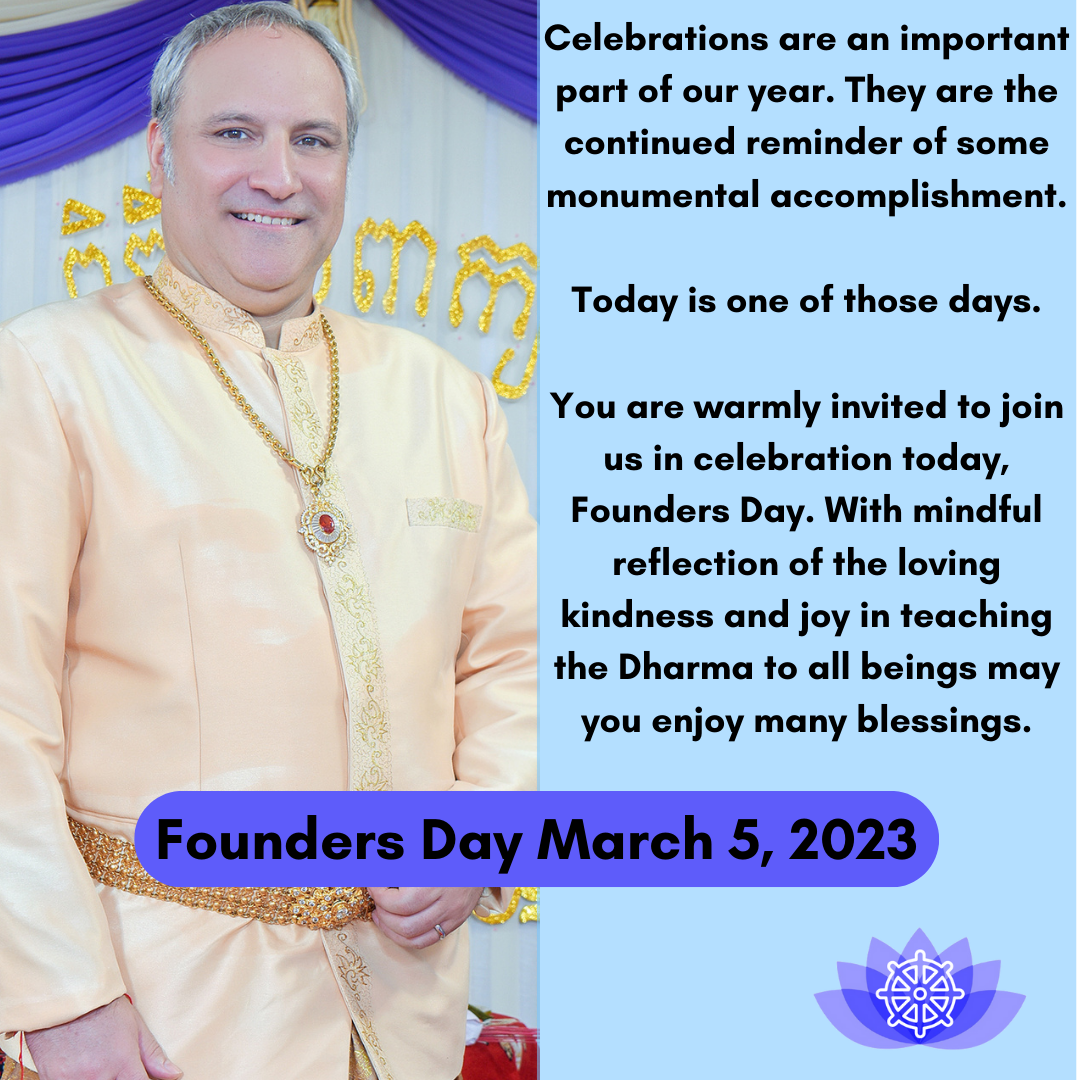
Our Founder
The work and support we offer is important and meaningful. 

And, most importantly, there is never a fee for any of our offerings.

How we serve others.

Each week we offer virtual sangha's for those that may have experienced trauma, LGBQT+ community, veterans, teens, and a general 'welcoming' sangha. All meetings are conducted via Skype and anonymity, if desired, is always maintained. 

We also offer several developmental classes, Resiliency+, for example. Being resilient is important to survival however when one only survives one misses the true beauty that is around us, even during those hard times.

Our Sutra Study is a weekly meeting where were explore one of the 84,000 Buddhist sutras, their meaning, and how they provide a necessary vehicle for beings to walk a noble path towards enlightenment.

In the summer we also offer a Teen Mindfulness camp. For one week teens from all communities are welcome to camp in our 'outdoor' meditation hall to disconnect from the harmful distractions of life so that they may learn the necessary mindfulness skills to help them navigate the challenges they will face in their adult life. 

Also on the last day of each month from May to September we offer Silent Retreats. Here practitioners from all ages and skill levels are invited to sit in silent contemplation, disconnect from their hectic lives so that they may reconnect to their being. A free vegetarian lunch is served as well. 

How are we able to provide our services at no cost?

Imagine a child or elderly person falling to the ground and in pain. Would you say 'I'll pick you up off the ground but only if you pay me'?

Of course not. You would assist them up, ask if they were OK, and comfort them as needed. 

We are compassionate towards all beings. We have empathy towards all beings. We know that all beings are suffering and we have the means to offer some relief of their suffering. So we do.

We are entirely donation based and warmly welcome all forms of generosity.

Our message?

Simply put, our message, my message, is the same as the Buddhas. It is one of hope. It is one of compassion. It is one of love for all living beings, including yourself.

Birthday Cake
So as you move about your day look at the stranger with welcoming eyes and a warm smile.

Make a donation to a local charity or animal shelter. 

Perhaps even embracing 'noble silence' when a stressful situation arises.

Being kind to those that need it is a wonderful way to share in the joy of this Founders day. 
   

Wishing you continued peace and wellbeing,


Vladimir


You are warmly invited to follow on us on Facebook and Instagram at @bluelotuscenter for more ways to improve your mindfulness practice and wellbeing.

Blue Lotus Meditation and Mindfulness Center is a registered 501(c)(3) religious organization.

Website and monthly newsletter: www.bluelotusmeditation.us

For guided meditations and Dharma talks, please visit and subscribe to our YouTube channel.

Facebook

Instagram


Wednesday, March 23, 2022

How To Tell If Your Mindfulness Practice Is Working

How do you know that mindfulness is working for you? Are there signs that come right out and say ‘now that my friend was mindfulness’?

I doubt there is such an obvious signal such as this.

So how may we tell that our practice is working for us?

There are several ways in which I think illustrate the effectives of your practice. The first is how you deal with a crisis.

The Buddha once asked an attendant of his to fetch him some cool water to drink. The dutiful attendant found a creek nearby to fill his vessel. 

Oxcart
However, at the same time an oxcart drove through this creek and muddied the water making it undrinkable. The attendant waited for the mud to settle before filling the drinking vessel.

The attendant related to the Buddha as to why it took him such a loving time to return, and the Buddha replied ‘A disturbed mind is the same as muddy water. With time the mud will settle, and we get clear water. And to get the clear water you didn’t have to do anything and only needed patience’.

In times of stress many people panic. Panic leads to frantic action, disorganized and counterproductive thoughts, stress and anxiety about potential or uncertain outcomes, and often to an even more undesirable outcome. Mindfulness and meditation allow one to foster and develop a sense of balance and calmness allowing one to act with care and attention. It is only when our mind is settled, we have clarity of thought.

At this time, I invite you to reflect upon a past time of crisis or high stress and reflect upon how you handled it. Was it with calmness or was it with agitation?

But what about something that is more of an everyday occurrence, like a relationship?

Often when we’re younger we seek someone that offers us something we ‘think’ we’re needing or lacking. It could be someone with an exciting hair style, a certain personality, or they could be the ‘dangerous or exciting’ person that we know our family with disapprove of. Perhaps we feel we may even be able to ‘fix’ them.

Man On A Motorcycle
But when we look at ourselves with mindful introspection as we age what do we see? Very often we see (hopefully) harmless youthful mistakes and adventures.

But consider where you are now. Have you left those cravings and desires behind, or have you substituted one for another?

For example, perhaps as a teen you liked the boy with the motorcycle or the one in a garage band. You though he improved your image giving you a rough edge, his friends were completely different than yours, and maybe he was several years older than you.

But now in your thirties or forties you find excitement from someone who works hard spending many hours at the office but is never home to nurture your wellbeing. You find creative ways to entice them but the response is seldom acknowledged in a meaningful way. Are you able to ‘fix’ them?

More likely though we begin to view life with more awareness and don’t seek the excitement of youth. We understand that those times served their purpose but have now passed. With our mindful practice we see more clearly, less muddied water if you will, the value of balance and calmness.

So again, how may we tell of our mindfulness practice is working? It’s working when we realize we have awareness of the present moment and welcoming in whatever we’re experience with balance an calm.


I wish you peace and ease, 

Vladimir

You are warmly invited to follow on us on Facebook and Instagram @bluelotuscenter for more way to improve your mindfulness practice and wellbeing.

Blue Lotus Meditation and Mindfulness Center is a registered 501(c)(3) religious organization.

Website and monthly newsletter: www.bluelotusmeditation.us

For guided meditations and Dharma talks, please visit and subscribe to our YouTube channel.

Facebook

Instagram

AmazonSmile

Thursday, December 23, 2021

Mindfulness, Schools, and Our Children’s Mental Wellbeing

Incorporating A Safe Space For Our Children

There was a TicTok video circulating recently calling for violence in our schools across our society. Although law enforcement determined this to be a non-credible threat many parents chose to keep their children home. Some schools even closed. My daughter text me to come pick her up early due to her not feeling safe in her school, regardless of the additional police presence.
Child, school

This text message and ensuing conversation with her caused me to pause and reflect not only on this type of situation that has become an all-too-common occurrence but to many other forms of anxiety and fear within our school system. 

Setting these types of gross violent incidents aside for a moment, consider how often our children experience bullying, ridicule, and instances of ostracizing on a daily basis.

These non-newsworthy actions result in feelings of anxiety and fear in a child in a place that is designed to enrich our young peoples lives.

When we think about our children being bullied we often neglect the ‘bully’ themselves. But they too are victims of fear, violence, ridicule, and anxiety, more likely as a result of some form of trauma at home. 
Child, domestic violence

So here too, a child’s home, is a place that is supposed to be supportive, comforting, and safe for a them but yet it isn’t.

So where is a young person, a child, supposed to feel safe during their day if needed?

Think about a location where you would want to retreat to in these circumstances and what you find comforting, relaxing, non-judgmental, and safe.

During my reflection a thought entered my mind. A room with no tables, no chairs, no aromas, but only soft, clean, and inviting cushions to sit on, and low, and soft, ambient lighting. A room of tranquility.
pretty room, relaxing room

Notice I make no mention of sounds or aromas. This is deliberate because sounds and aromas may trigger the memory of trauma which is what we’re trying to avoid in this room.

Imagine if this type of room were readily available at all times during the school day. Who could potentially use this type of safe space?

I’m sure we can picture a child who is bullied in this room but what about the ‘popular’ girl or boy who is being sexually molested that we have no idea about. Or perhaps it’s the child who is unassuming, who avoids attention because they don’t cause trouble but yet they feel alone inside with screams of pain well hidden from all.

People need a retreat, a safe space, somewhere to regain their balance. A room of tranquility has the potential to offer this to some child in need.

A room of tranquility doesn’t need to be staffed with a mental health professional. It could be staffed with a teacher, an administrator, a priest, a rabbi, a volunteer senior citizen. The only requirement needed is non-judgmental listening if needed and no offerings of advice or suggestions.

Maybe this is the room where a student realizes that their life has value. Maybe this is the room where a student reaches out to a trusted adult to let them know what is happening at home. Maybe this is the room where a student realizes that committing an act of violence in their school will only cause more suffering.

Something to consider, don’t you think?
 

I wish you peace and ease,

Vladimir


Blue Lotus Meditation and Mindfulness Center is a registered 501(c)(3) religious organization.

Wednesday, October 13, 2021

The Thirty-Three Year Old Grudge

Holding On To The Past To Inhibit Love

Imagine being angry all of the time. What damage must that do to your spirit over the course of an hour? A day? A week? Or, 30 years?

We have often heard that holding onto anger and resentment is like travelling with excess baggage at the airport terminal. It is cumbersome to move around, we bump into people along the way, and we may not get to our gate on-time. It certainly makes for an unpleasant experience moving from one location to another.

train station

Now, imagine holding onto a grudge because of something that happened, not necessarily to you, but within a family. Divorce.

Children and young teens often lack the emotional maturity to realize that whatever is happening between the parents has nothing to do with them. 

Lacking the necessary coping skills, young people often express themselves through unhealthy ways. Violence, sexual activity, stealing, thrill-seeking, drugs, or alcohol may be among these expressions.

All of these actions, and many more, are examples of suffering. 

And as a result, sadly, this all too often extends suffering towards other family members and friends as well. 

In other terms, suffering is labeled as a traumatic experience. And it’s important to remember that trauma is defined by the survivor not necessarily by a specific circumstance.

Sometimes as children mature they 'grow' out of this self-destructive behavior. They've learned to accept the circumstance and to let go of the past so that they may move forward and blossom. 

Sometimes they do not.

It's commonly believed that people need to 'integrate' their trauma to overcome or deal with the experience but that's not true. The traumatic event has already happened. It no longer exists, the danger has passed, but remains in the memory. 

It's commonly believed that people need to 'integrate' their trauma to overcome or deal with it but that's not true. The traumatic event has already happened. It no longer exists, the danger has passed, but remains in the memory. 

The next step, which can be difficult, is accepting that what has happened did happen, and realize it is in the past which can no longer affect us. Acceptance is then followed by letting go, which too can be difficult as well. 

Acceptance and letting go can be successfully accomplished with mindful meditation.   

Imagine a couple divorcing over 30 years ago and one child, now in their upper 40s, still using that experience as justification for their current behavior. 

'I act the way I do in 2021 because of what happened in 1988'

Knowingly causing harm to themselves and others but not seeking the help necessary to stop the suffering that they continuously experience has persisted for decades.

This traumatic event, for this poor child, has been watered and nurtured into resentment and has now manifested as a long-term grudge. 

Long-term happiness, balance, and joy have been replaced with superficial, short-term relationships, low self-esteem, negative police interactions, and perpetual suffering.

woman with luggage

This is not a wholesome and balanced lifestyle especially when so much more is out there and readily available.

Sadly, this has been a long, lonely time to carry this baggage in a terminal to not arrive at a peaceful destination. 

So how may mindfulness help relieve this suffering?

When we sit mindfully breathing in, we can say ‘As I breath in I feel my suffering’. ‘As I breath out I walk forward with peace’

The in breath acknowledges and accepts the suffering they are experiencing while the exhale allows this suffering to pass and they may walk forward without continued suffering.

If you know of someone who has experienced a traumatic event let them know that help is available.


I wish you peace and ease,

Vladimir


Blue Lotus Mindfulness and Meditation Center is a registered 501(c)(3) religious organization.

Thursday, September 23, 2021

How Mindfulness Literally Saved A Life

The Power Of Doing Nothing

We all have read a poem or story or heard a speech that moved us in some way. Sometimes these words are so moving and life altering that they help us to adjust course along our life's path.

We often do not understand the power of our words. Some people do and use this realization for either personal gain or for the benefit of others. It is also important to realize that you do not need to be in a position of power to have this effect on people too. It could be a small post on social media, a kind word to a stranger passing by, that impacts a persons life.

To my knowledge I have never been that person who had positively impacted another's life in such a way. It was not until the other day when I had a very humbling conversation with one of my practitioners who passed on a conversation they had had with another fellow practitioner.

It was related to me that this person had accidently stumbled on our Sangha and thought what the heck, I'll give mindfulness meditation a try.

woman overwhelmed

It turns out this fortunate encounter saved their life, literally. There was a lot going on in this persons life and they were at an impasse. But the practice of sitting and 'doing nothing', connecting with themselves and the world around them, and relearning all that they had been taught in the past changed their perspective for the better.

Mindfulness allowed them to change their perspective from one that had a catastrophic outcome to one that was more subdued and then eventually to one of balance. Perspective is an important consideration when analyzing a situation. Most often we view circumstances in the most catastrophic manner possible. And more realistically it is not typically a viable outcome.

People often tend to dwell on a situation, playing it forwards and backwards, constructing 'what if's' that too will never come to fruition all in the name of 'covering their bases'. When we look back at many of these events in our own lives we see that they very seldom happen and if they do it is no where near as bad as we play in our minds.

All in all, you are still here and you have overcome what ever the circumstance was.

The situation they were currently dealing with did not change. However their perspective, or view, as a direct result of sitting mindfully, connecting with themselves to achieve calmness of this circumstance did. And that is one of the many results of mindfulness.

support, holding hands

One person can make a difference and that person can easily be you. Everyone you meet, even for the briefest of moments, whether it is at the grocery store, the cashier at a restaurant, the cart collector at a retail store, is an opportunity for you to help someone.

Many people are fighting internal battles which we will never know and part of being a mindfulness practitioner is helping people ease their suffering.

Be kind. Be considerate. Be empathetic. You never know what someone else is going through.


I wish you all peace and ease.


Vladimir


Blue Lotus Mindfulness and Meditation Center is a registered 501(c)(3) religious organization.

Monday, December 21, 2020

Meditation, Mindfulness, and Trauma

Incorporating Mindfulness Into Healing From Trauma

Mindfulness and meditation have many positive aspects which can improve the relationship with ourselves, others, and the world we live in. We can directly see these positive outcomes by the way people react to us or even how our body responds to the prolonged tranquil feelings we have developed.

But what about the negative aspects of meditation? Are there any?

Believe it or not there are some instances where a meditation practice may be more harmful than beneficial.

Take for instance someone who has experienced a traumatic event and now is dealing with Post Traumatic Stress Disorder (PTSD).

man meditating
Let us consider what a traumatic event is. A traumatic event is not necessarily the event a person experiences but how this person views and integrates this experience into their being. 

For example, a traumatic event is not only the soldier who comes home from a war situation and 'has bad dreams', or a child sexual abuse survivor, but it may also include a homicide detective who experiences countless humans who have been murdered a person who was robbed at gunpoint. 

A traumatic event could also be the daily racial profiling that goes on while shopping or driving, economic disparity, any form of government (even in the USA). 

Therefor it is vital that the traumatic event is defined by the individual who experiences a particular event not the specific event.   

Normally, meditation asks the practitioner to be aware of their thoughts, any current physical sensations, and feelings which is beneficial in establishing a connection with your surroundings. However, someone who has experienced a traumatic event may relive the experience as a current happening while in meditation and flooding their senses into a heightened state of stress or danger. 

Such experiences often cause more harm than good and inhibit the letting go that is necessary.

It is a common misconception that the traumatic event must be integrated and that the survivors mind is rejecting this integration. But in the mindfulness perspective it is the opposite. The survivor is actually holding on to the event and not letting go. Accepting the traumatic event as over, in the past and not capable of causing us harm, is the path towards the liberation of the event.

Woman, Sunrise, Joyful
As will all emotions, fear, love, anger, jealously, joy, we recognize their existence as they enter our being, we let them sit for a time, but then let them go. This is the quality of impermanence that nothing is a permanent fixture and will cease to exist. Thoughts included. 

Mindfulness instructors want to help but some may not have the necessary experience in dealing with a practitioner who is a survivor of a traumatic experience. If you are seeking a mindfulness instructor with this expertise, just ask them. If they do not have the experience they will earnestly tell you and assist you in finding a qualified instructor.

Mindfulness meditation truly is for everyone, no matter where you may be. It is a path of warm embrace, compassion, empathy, and lovingkindness.

If you have been the victim of a traumatic event, there are resources out there, with me or your mindfulness instructor being only one of them.

Please feel free to comment below.

Wishing you peace and ease,

Vladimir


Blue Lotus Meditation And Mindfulness Center is a registered 501(c)(3) religious organization.

The Sixteen Imperfections of the Mind | The Eight Imperfections : Part 2 Subtle Distortions of Identity

As we continue, the first eight imperfections are loud and easy to recognize. The second eight are quieter. They hide behind respectability ...